
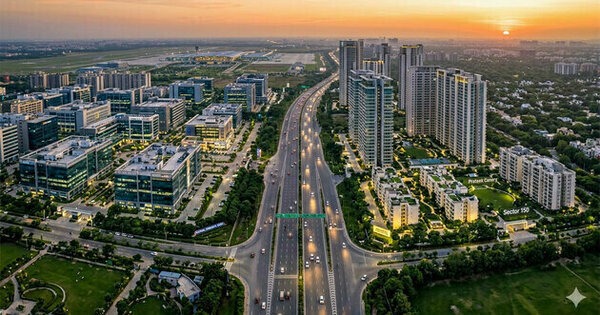
Greater Noida is quietly becoming one of the most exciting food & beverage markets in the entire National Capital Region. With a planned urban layout, a rapidly growing professional and student population, world-class educational institutions, and a consumer base that actively seeks quality dining experiences — the demand for organised food court spaces has never been stronger.
If you’re an F&B entrepreneur, a restaurant chain looking to expand, a cloud kitchen operator scouting a dine-in format, or a franchise investor evaluating your next location — a food court unit for lease in Greater Noida could be your most strategic business decision of 2025.
This comprehensive guide covers everything from the best food court locations and lease rates to infrastructure requirements, legal compliance, and negotiation strategies — so you can make a fully informed decision before signing your lease.
Why Greater Noida is a High-Potential Market for Food Court Businesses
A Large, Diverse & Hungry Consumer Base
Greater Noida is home to a uniquely diverse demographic mix that drives consistent food court footfall:
- Students: Home to some of India’s largest universities including Sharda University, Galgotias University, Bennett University, and GNIOT — collectively enrolling over 1.5 lakh students
- IT & Corporate Professionals: Thousands of working professionals in the Knowledge Park and Tech Zone corridors who rely on food courts for daily meals
- Residential Families: A rapidly growing middle and upper-middle-class residential population in Greater Noida West and planned sectors
- Mall & Multiplex Visitors: Organized retail destinations like Gaur City Mall, DLF Mall of India (nearby), and upcoming malls drive significant weekend footfall to food courts
Organised Infrastructure = Better Business Environment
Unlike unplanned markets, Greater Noida’s food courts operate within well-designed commercial buildings with proper exhaust systems, dedicated utility connections, fire safety compliance, and structured lease agreements — reducing operational headaches and ensuring a professional environment.
Lower Rental Costs vs. Delhi & Noida Prime
Food court unit lease rates in Greater Noida are 25–40% lower than comparable spaces in Noida Sector 18, Rajouri Garden, or South Delhi — while offering access to an equally aspirational consumer base. This directly translates to better unit economics and faster break-even for F&B operators.
Rapid Commercial Development
New malls, multiplex-anchored commercial complexes, and high-street food zones are being launched across Greater Noida at an accelerating pace, creating a growing supply of quality food court spaces for lease across multiple formats and price points.
Types of Food Court Units Available for Lease in Greater Noida
Understanding the different food court formats will help you match the right space to your business model, cuisine type, and target customer.
1. Mall Food Court Units
Organised food courts within shopping malls are the most sought-after format for established F&B brands and franchises. These spaces come with:
- Pre-installed exhaust and ventilation systems
- Shared seating areas managed by the mall
- Standardised utility connections (water, power, gas)
- High and consistent footfall driven by anchor stores and multiplexes
- Professional facility management
Ideal for: QSR chains, regional cuisine brands, dessert and beverage concepts, franchise outlets
Typical size: 150 sq. ft. to 600 sq. ft. (kiosk to full counter unit)
2. High-Street Food Zones
Standalone or cluster-format food zones within commercial complexes along major roads. These offer greater operational flexibility — including larger kitchen spaces, independent signage, and outdoor seating — compared to mall food courts.
Ideal for: Casual dining restaurants, cafés, bakeries, regional cuisine specialists, and multi-cuisine eateries
Typical size: 400 sq. ft. to 3,000 sq. ft.
3. Food Kiosks & Kiosk Courts
Smaller format units typically occupying 50–150 sq. ft., positioned at high-traffic intersections within malls, commercial corridors, or transit hubs. Lower investment, faster setup, and quick break-even make these attractive for beverage brands, snack concepts, and dessert counters.
Ideal for: Juice bars, bubble tea, ice cream, momos, sandwiches, and single-product concepts
4. Ghost Kitchen / Cloud Kitchen Units within Food Courts
Some commercial developments in Greater Noida now offer dedicated cloud kitchen pods within food court infrastructure — giving operators access to shared utilities and delivery aggregator tie-ups without requiring a dine-in format.
Ideal for: Delivery-first brands, dark kitchen operators, and multi-brand cloud kitchen operators
5. Multiplex-Adjacent F&B Units
Units located immediately outside or within multiplex complexes benefit from pre-movie and post-movie dining footfall — one of the most reliable and time-predictable traffic patterns in the F&B industry.
Ideal for: Popcorn and snack counters, casual dining, quick bites, and beverage concepts
Best Locations for Food Court Unit Leasing in Greater Noida
Knowledge Park II & III — The Student & Corporate Corridor
The Knowledge Park zone is ground zero for F&B demand in Greater Noida. Surrounded by Sharda University, Galgotias College, and numerous IT and corporate offices, food businesses here enjoy a massive daily captive audience of students and professionals.
Why it works: High footfall 6 days a week, price-sensitive but volume-driven consumer base, strong demand for diverse cuisine options
Alpha I & II Commercial Belt
One of Greater Noida’s oldest and most established commercial corridors, Alpha I and II host a mix of showrooms, offices, restaurants, and retail stores. Food court units here benefit from established catchment and strong brand visibility.
Why it works: Mature market, good vehicle and pedestrian traffic, proximity to planned residential sectors
Gaur City — Greater Noida West’s Retail & F&B Hub
Gaur City’s commercial zones are among the busiest retail and dining destinations in Greater Noida West, serving the massive residential population of the Gaur City township and surrounding sectors.
Why it works: Captive resident population, high weekend footfall, growing demand for quality dining options
Pari Chowk — The Gateway Commercial Junction
Pari Chowk is Greater Noida’s most prominent commercial intersection, with heavy vehicular traffic and an emerging cluster of hotels, restaurants, and commercial complexes. Food court units near Pari Chowk benefit from exceptional visibility and accessibility.
Why it works: High brand visibility, transit traffic, proximity to expressway, hotel and hospitality adjacency
Techzone 4 & Sector 16B — The New Commercial Frontier
Emerging commercial hubs in Greater Noida West with several new food court-enabled projects under development. Early movers can secure premium units at pre-launch or soft-launch pricing before the market matures.
Why it works: First-mover advantage, competitive lease rates, rapidly growing residential and office catchment
Omaxe Connaught Place & Organized Retail Destinations
Greater Noida’s organized mall destinations host fully operational food courts with established footfall, anchor tenants, and professional mall management — offering a structured, branded environment for serious F&B operators.
Why it works: Consistent footfall, premium positioning, ideal for national and regional chain expansions
Average Food Court Unit Lease Rates in Greater Noida (2025)
| Unit Type | Size Range | Average Lease Rate |
|---|---|---|
| Mall Food Court Counter | 150 – 400 sq. ft. | ₹120 – ₹250/sq. ft./month |
| Food Kiosk (Mall / High Street) | 50 – 150 sq. ft. | ₹8,000 – ₹35,000/month (fixed) |
| High-Street F&B Unit | 400 – 2,000 sq. ft. | ₹70 – ₹150/sq. ft./month |
| Multiplex-Adjacent Unit | 200 – 800 sq. ft. | ₹100 – ₹200/sq. ft./month |
| Cloud Kitchen Pod | 100 – 300 sq. ft. | ₹20,000 – ₹60,000/month |
| Large Format Restaurant Space | 1,500 – 5,000 sq. ft. | ₹55 – ₹120/sq. ft./month |
Rates are indicative and vary based on mall/complex grade, specific location, unit size, floor level, and lease tenure. Revenue-sharing arrangements are common in organized malls.
Infrastructure Requirements for Food Court Units — What to Check Before You Sign
One of the most critical — and often overlooked — aspects of leasing a food court unit is verifying that the infrastructure supports your specific F&B operation. Here’s a detailed checklist:
Kitchen & Utility Infrastructure
- ✅ Exhaust & Ventilation: Confirm duct size, CFM capacity, and termination point. Insufficient exhaust is the #1 operational deal-breaker for F&B units
- ✅ Water Supply: Verify inlet pipe size, pressure consistency, and availability of hot water connection
- ✅ Drainage: Grease trap provision and drainage capacity for high-volume cooking operations
- ✅ Gas Connection: PNG (Piped Natural Gas) availability is preferable over LPG for cost and safety reasons
- ✅ Electrical Load: Confirm sanctioned load in KW — commercial kitchens typically require 5–15 KW per unit minimum
- ✅ Power Backup: 100% DG backup is essential for uninterrupted food service operations
Seating & Common Area
- ✅ Shared seating capacity relative to number of food court tenants
- ✅ Seating area maintenance responsibility and cost allocation
- ✅ Air conditioning coverage and temperature control in common seating areas
- ✅ Tray return, waste segregation, and housekeeping systems
Storage & Back-of-House
- ✅ Cold storage or refrigeration provisions within or adjacent to the unit
- ✅ Dry storage space (often underprovided in food court units — verify carefully)
- ✅ Staff entry, locker room, and restroom access for kitchen personnel
Licences & Compliances Required to Operate a Food Court Unit in Greater Noida
Operating an F&B business in Greater Noida requires obtaining multiple licences and registrations. Start the process early — some approvals can take 30–90 days.
Mandatory Licences
- FSSAI Licence: Central FSSAI licence required for food businesses with annual turnover above ₹20 lakhs. State licence for smaller operators
- GNIDA Trade Licence: Issued by Greater Noida Industrial Development Authority for commercial food operations
- Fire NOC: Mandatory from the UP Fire Services Department for any food operation with cooking
- Health Trade Licence: From the local municipal or authority body
- GST Registration: Mandatory for food businesses; 5% GST applies on restaurant services (without ITC)
- Shops & Establishments Registration: Under UP Shops and Commercial Establishments Act
Additional Licences (If Applicable)
- UP Excise Licence: Required if you intend to serve beer, wine, or spirits
- Music Licence: PPL and IPRS licences if you play recorded music in your establishment
- Lift & Weights Certificate: If operating in a multi-storey food court setup
- Pollution Control Clearance: For high-volume cooking operations generating significant smoke or effluent
Lease Terms & Smart Negotiation Strategies for Food Court Units
Typical Lease Structure in Greater Noida Food Courts
- Lease Tenure: 3 to 9 years for mall food courts; 1 to 5 years for high-street F&B units
- Revenue Sharing: Many mall operators charge a base rent + a percentage of monthly revenue (typically 10–18% of gross revenue, whichever is higher)
- Security Deposit: 3 to 6 months’ base rent
- Annual Escalation: 5% to 15% per annum (negotiate for 5% or a 3-year flat-then-step structure)
- Fit-Out Period: Request 30 to 60 days rent-free for kitchen setup and trial operations
- CAM Charges: Common area maintenance charges of ₹15 – ₹40 per sq. ft. per month are typical in organized food courts
Negotiation Tips Specific to F&B Leases
- Negotiate fit-out support: Some mall developers offer fit-out contributions (typically ₹500–₹1,500 per sq. ft.) to attract anchor F&B brands — always ask
- Cap the revenue share percentage: If opting for a revenue-share model, cap the percentage and negotiate a minimum guaranteed period before revenue share kicks in
- Secure exclusivity clauses: Negotiate exclusivity for your cuisine category within the food court — prevents the landlord from leasing an adjacent unit to a direct competitor
- Include a termination for cause clause: Allows you to exit the lease if footfall falls below a mutually agreed threshold — critical protection for F&B businesses heavily dependent on mall traffic
- Clarify utility billing: Understand exactly how electricity, water, and gas consumption will be metered and billed — shared utility models can lead to unexpectedly high monthly costs
Financial Planning: Unit Economics for a Food Court Business in Greater Noida
Before signing your lease, build a detailed unit economics model. Here’s a framework to guide your planning:
Sample Monthly Cost Structure (400 sq. ft. High-Street F&B Unit)
| Cost Head | Estimated Monthly Cost |
|---|---|
| Base Rent (₹100/sq. ft.) | ₹40,000 |
| CAM / Maintenance Charges | ₹8,000 – ₹12,000 |
| Electricity (with backup) | ₹15,000 – ₹25,000 |
| Water & Gas | ₹5,000 – ₹10,000 |
| Staff Salaries (4–6 staff) | ₹60,000 – ₹90,000 |
| Raw Material Cost (30–35% of revenue) | Variable |
| Packaging & Consumables | ₹5,000 – ₹10,000 |
| Aggregator Commission (if applicable) | 18–30% of delivery revenue |
| Total Fixed Monthly Overheads | ~₹1,33,000 – ₹1,87,000 |
A well-run food court unit in Greater Noida typically targets a monthly revenue of ₹4–8 lakhs to achieve healthy profitability at these cost levels.
Top F&B Concepts That Work Well in Greater Noida Food Courts
Based on consumer demand patterns and successful operators already thriving in the market, the following F&B concepts have proven particularly well-suited to Greater Noida food courts:
- North Indian Thali & Comfort Food — Strong demand from students and families
- South Indian (Dosa, Idli, Filter Coffee) — Underserved category with loyal following
- Chinese & Pan-Asian (Momos, Noodles, Sushi) — Consistently the highest-selling category in NCR food courts
- Burgers, Wraps & Sandwiches — Quick service, high margin, strong youth appeal
- Pizza & Italian — Reliable performer in family-oriented food courts
- Desserts & Beverages (Bubble Tea, Waffles, Shakes) — High-margin kiosk format with excellent ROI
- Healthy & Diet Food — Growing demand among fitness-conscious professionals and students
- Regional Street Food (Chole Bhature, Pav Bhaji, Chaat) — Crowd favorite with authentic positioning
Frequently Asked Questions (FAQs)
What is the minimum investment required to open a food court unit in Greater Noida?
A basic food court kiosk or counter can be set up for ₹5–10 lakhs including fit-out, equipment, and initial working capital. A full food court unit or casual dining setup typically requires ₹15–40 lakhs depending on size and concept.
Can I operate a franchise brand in a Greater Noida food court?
Yes. Greater Noida food courts are increasingly preferred by national and regional franchise brands due to the area’s growing consumer base and competitive lease rates. Confirm with your franchisor that the specific location meets their site selection criteria before signing.
Is revenue sharing or fixed rent better for a food court unit lease?
Revenue sharing is generally better during the initial ramp-up phase as it reduces fixed cost pressure. However, once the business stabilizes and revenue grows, a fixed rent model is typically more profitable. Negotiate a hybrid structure where possible.
How long does it take to get all licences to operate a food court unit in Greater Noida?
Allow 45–90 days for all licences to be processed. FSSAI and fire NOC are typically the most time-consuming. Start the licence application process in parallel with your fit-out to avoid unnecessary delays in opening.
Are food court units in Greater Noida suitable for cloud kitchen or delivery-only operations?
Some commercial developments offer delivery-optimized units within food court infrastructure. However, purely delivery-focused operations are better served by standalone cloud kitchen facilities in industrial or commercial zones with direct street access for delivery partners.
Conclusion: Seize Your Food Court Opportunity in Greater Noida Before Competition Catches Up
The F&B market in Greater Noida is at an inflection point. Consumer demand is strong and growing, the food court infrastructure is rapidly improving, and lease rates are still at pre-maturity levels — making right now one of the best times to secure a food court unit for lease in Greater Noida.
Whether you’re launching an original concept, expanding a regional chain, or opening your first franchise outlet — Greater Noida’s diverse and hungry consumer base offers the volume, variety, and spending power to build a thriving food business.
The best food court units in prime locations are being snapped up quickly. Connect with a specialist commercial real estate advisor in Greater Noida today — get verified listings, arrange site visits, and negotiate the best lease terms for your F&B venture.
Planning to lease a food court unit in Greater Noida? Our commercial property specialists have exclusive access to the best food court spaces across malls, high streets, and emerging commercial hubs in Greater Noida. Get in touch today for a free consultation and site shortlisting.